If your scaffolding business still runs on a diary and a whiteboard, you’re not “behind”—you’re using tools that work brilliantly when the week is simple and everyone can read the room.
The problems start when the workload ramps up: jobs overlap, access windows tighten, customers change dates, and the schedule quietly becomes “what one person knows” instead of something the whole business can rely on. This article shows where margin is really won (or lost), why familiar tools break under pressure, and what digital gang scheduling can do to make the week calmer, clearer, and more profitable—without putting your managers on autopilot.
The diary is the centre of the business (and it’s where margin is protected)
In scaffolding, the diary isn’t “admin” . It’s your live operating system: labour, vehicles, materials, yard loading, permits, access constraints, and customer promises all collide there— in real time.
When the diary is healthy, the whole week runs differently:
- Gangs arrive to the right site with the right gear and the right information.
- Supervisors keep work moving instead of ringing the office for basics.
- The office plans ahead instead of firefighting avoidable issues.
- You protect margin because wasted travel, stand-down time, and rework get expensive fast with a full gang.
The hard part is scaffold scheduling behaves like dominoes. Move one job and you can trigger a chain reaction across multiple sites and multiple gangs—especially when you’re juggling deliveries, inductions, customer readiness, and time-critical access windows.
That’s why “better scheduling” usually doesn’t mean a prettier plan. It means the plan stays reliable even when reality changes—so you can make trade-offs quickly, consistently, and with the real cost visible.
Owner takeaway: If you want more reliable profit, start by making the diary more reliable—not by pushing harder on the crews.
Where whiteboards, spreadsheets, and WhatsApp start to cost you
Whiteboards are brilliant when the operation is small: they’re visual, fast, and everyone can see the plan. Spreadsheets feel organised. WhatsApp gets changes out quickly.
The issue isn’t that these tools are “bad”—it’s that scaffolding is change-heavy by nature. Once you’re busy, the plan changes faster than the tools can keep up, and you end up managing the week on out-of-date versions, screenshots, and memory.
| Tool | Why it works early on | Where it breaks under real
pressure |
| Whiteboard | Fast, visual planning in one place | Not live for the field; no history
of changes; easy to miss knock-on impacts; the plan becomes “nearly right” most of the time |
| Spreadsheet | Structured lists and allocations | Version chaos; slow to update; conflicts are hard to spot; job notes get separated from the schedule; not built for live dispatch |
| WhatsApp / texts | Quick updates and confirmations | Info gets buried; not everyone sees the same context; screenshots go stale; the field
runs on messages that are outdated as soon as they’re sent |
The common failure is trying to run a live schedule without a single, reliable, shareable source of truth. In scaffolding, small misses create big costs—because one wrong detail can waste a full gang’s morning.
What digital gang scheduling changes: visibility + job info that travels with the booking
Many owners go looking for a system that stops change. That system doesn’t exist— customers change dates, sites aren’t ready, weather hits, and urgent jobs appear. What you actually need is visibility: a diary that shows the real plan, the constraints, and the knock-on impact of every move.
What visibility looks like in practice:
- Visibility of the week so conflicts show up before they turn into phone calls.
- Visibility for the field so gangs aren’t relying on second-hand messages and screenshots.
- Visibility of constraints (skills, access, materials, vehicles, permits) so you plan with reality—not hope.
This matters because “just move Job A to Tuesday” is rarely just one change. It forces quick decisions with real cost attached:
- Which gang is actually suitable? (Not just available.)
- What’s the travel and loading plan? (Vehicles, yard, lifts, access windows.)
- What else was that gang meant to do? (And what happens if you steal them?)
- Is the site ready? (Access, permits, inductions, other trades, customer readiness.)
Reality check: A not-ready site can cost you twice: you pay for the wasted trip and you pay again when you reshuffle the week to recover.
The biggest step-change comes when job information travels with the booking. A gang shouldn’t just see a name in the diary—they should be able to answer practical questions without ringing the office:
- What are we doing there (erect / adapt / strike / inspection)?
- What time window did we promise—and who’s the site contact?
- What access notes matter (keys, gate codes, inductions, parking, deliveries)?
- What’s the readiness status (confirmed / at risk / not ready)?
- What does “done” look like (scope, photos, sign-off requirements)?
When those details live in one place with the schedule, you reduce one of the most expensive drains in the business: constant calls back to the office for clarification.
How SDL Pro Management fits (without turning scheduling into autopilot)
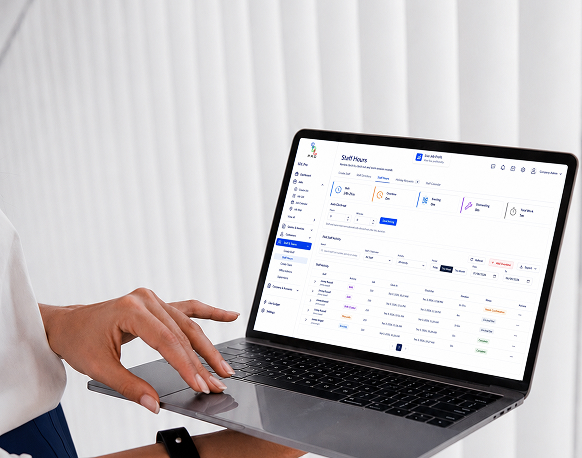
SDL Pro Management includes a drag-and-drop diary designed around managing scaffold gangs and jobs. Instead of rewriting the schedule manually, office staff can adjust the plan as reality changes—while keeping the diary connected to job details and operational updates.
Here’s what that can look like day to day:
- If Tuesday’s job moves to Wednesday — reschedule once in the diary and everyone works from the same live plan.
- If another gang needs allocating — allocate the right crew and keep knock-on impacts visible while you decide the best trade-off.
- If the week needs reshuffling — view by day/week/gang/job so decisions are faster and less dependent on “who remembers what”.
To connect the schedule to the workforce, the SDL Pro Management Staff Portal helps supervisors and gangs access what they need without relying on a message that was true on Monday. Depending on configuration, that can include:
- Today’s jobs and upcoming workSite locations and start times
- Job information and relevant documents
- Clock in/out and job status updates
Important: Better scheduling doesn’t mean removing human decisions. Technology should support your managers’ judgement—not replace it. The goal is clearer visibility, faster communication, and fewer preventable mistakes.
Better visibility usually means better customer service
Customers don’t care how complicated your diary is. They care whether you arrive when you said you would—and whether you can give accurate information when plans change.
When your office has a live, shareable schedule (and the field can see the same plan), it becomes easier to react earlier and communicate clearly. That often means:
- Better communication because you’re working from one version of the truth.
- More realistic arrival information because conflicts show up earlier, not after the gang is already on the road.
- Fewer missed appointments because the team has the job details, not just the job name.
- Faster rescheduling because changes don’t rely on relaying messages person-by-person.
- A more professional customer experience because you can explain what’s happening with confidence.
Conclusion: upgrade the diary, protect the margin
Moving from whiteboards to digital gang scheduling isn’t about being “modern” . It’s about making the diary less dependent on who’s in the office, reducing preventable wasted time, and giving everyone the same live plan to work from—without losing the flexibility scaffolding requires.
If you take nothing else from this: aim for visibility, not perfection. Change will happen. The win is seeing the impact early, communicating it clearly, and keeping the week under control.
Owner checklist: what to improve first
- Create a single source of truth for the schedule (no photos, no “latest spreadsheet”).
- Attach job-critical info to each booking (site contact, access notes, readiness status, scope).
- Make the schedule accessible to supervisors and gangs without calling the office.Record why changes happen (not-ready site, materials, access, customer change) to improve estimating and quoting.
- Link scheduling decisions to labour reality (skills, availability, gang makeup).
Once those basics are in place, you’ll feel it quickly: fewer calls, fewer wasted trips, better promises, and a calmer week—without turning your managers into passengers.
Call to action: Write down the top five pieces of information your teams repeatedly chase (access, contacts, readiness, scope, start window). Make them mandatory on every booking. Then evaluate whether a digital diary—such as the drag-and-drop scheduling in SDL Pro Management plus the Staff Portal—fits the way your scaffold gangs actually work day to day.