Paperwork is rarely what causes a scaffold incident—but it’s often what causes a compliance headache. If you run a scaffolding business, you’ve probably felt it: the bigger you get, the harder it becomes to keep documents accurate, traceable, and available when someone asks for them.
This article breaks down why compliance admin becomes painful as you scale, where the common document gaps appear (and why they matter), and how digital systems can make compliance easier—without pretending they replace competent people and proper inspections.
Why paperwork gets harder as your scaffolding business grows
When you’re running a small number of jobs, “paperwork” feels manageable—often because the people doing the work are the same people holding the knowledge. But as you add more
crews, more sites, more supervisors, and more customers, the admin load doesn’t grow in a straight line. It multiplies.
The challenge isn’t that compliance documents are complicated on their own. The challenge is that they’re distributed: across vans, WhatsApp threads, clipboards, shared drives, office inboxes, and customer requests—often with no single place that tells you what the current truth is
| As you grow… | What usually breaks | What it turns into |
| More jobs running at once | Documents don’t stay linked to the right
scaffold/job |
Time lost proving what happened and when |
| More people creating/handling
documents |
Different versions circulate | Confusion, rework, and audit stress |
| More customers and site teams involved | Docs aren’t shared consistently | Customers chasing, you firefighting |
| More inspections, handovers, changes | Paper trails become fragmented | “We did it” becomes hard to demonstrate |
Owner’s reality check: The moment your compliance relies on “knowing who to ask, ” you’re one holiday, one staff change, or one urgent customer email away from a scramble.
Compliance falls apart when documents aren’t connected to the scaffold
Most document issues come down to one core problem: information exists, but it isn’t reliably connected to the specific scaffold, location, and time it relates to. That’s when you start seeing gaps in traceability—especially after changes, extensions, dismantles, or a busy week when everyone is moving fast.
- Inspections and handover certificates must stay tied to the scaffold. If an inspection record or handover certificate can’t be clearly matched to the exact scaffold (and where it is), it becomes less useful the moment someone challenges it. The best record is the one you can retrieve quickly, show confidently, and explain without “I think that was the other job. ”
- RAMS and method statements need to reach the right people. A RAMS pack that sits in an inbox doesn’t protect anyone. It has to reach the people doing the work and the people controlling the site—so the plan is actually understood and followed. When documents are shared inconsistently, the risk isn’t just “missing paperwork”; it’s crews working from assumptions instead of the agreed method.
- Drawings and design information need version control. Scaffolding often evolves as site conditions change. Without clear versioning (what’s current, what’s superseded, who approved it, and when), teams can end up building to the wrong drawing or relying on outdated design detail. That’s when “we had a drawing” becomes “which drawing?”—andit’s never a comfortable conversation.
- Photos should be tied to the job, not someone’s camera roll. Photos are one of the most valuable pieces of evidence you’ll ever have—condition at handover, key details, site constraints, and changes over time. But photos only help if you can prove what they relate to. If they live in personal phones or unnamed folders, they’re hard to find and easy to dispute later.
The practical goal isn’t to create more admin. It’s to make sure each job has a clear, accessible record that answers the same questions every time: What was built? Who checked it? When? Against what documents? and what changed?
Why customers shouldn’t have to keep chasing documents
From a customer’s perspective, compliance documents aren’t a “nice to have”—they’re often required to keep their site running. If a principal contractor, facilities team, or site manager has to keep asking for handover certificates, inspection records, or supporting documentation, two things happen:
- They lose confidence that the job is being controlled properly—even if your standards on site are excellent.
- Your team spends time chasing, forwarding, renaming, and re-sending files instead of supervising work and winning new business.
This is where strong operators separate themselves. Making documents easy for customers to access doesn’t just “look professional”—it reduces friction, prevents delays, and avoids that last-minute panic before an audit, site visit, or safety review.
Simple standard to aim for: If a customer calls asking for a document, your team should be able to share it in minutes—confident it’s the right document, for the right scaffold, with the right date/version.
Digital systems help—but they don’t replace competence or inspections
Digital tools can remove duplication, reduce lost paperwork, and improve traceability. But they don’t change the fundamentals: competent people still need to plan, supervise, inspect, and make decisions on site. A digital checklist is only as good as the inspector using it, and no software can replace a proper inspection carried out by someone who knows what they’re looking at.
Used properly, digital systems support compliance in three practical ways:
- Consistency — the same process, the same fields, the same required evidence every time.
- Traceability — clearer links between the scaffold, documents, inspections, and sign-offs.
- Speed — faster retrieval when customers, auditors, or site teams need proof.
SDL Pro Management: bringing the compliance picture together
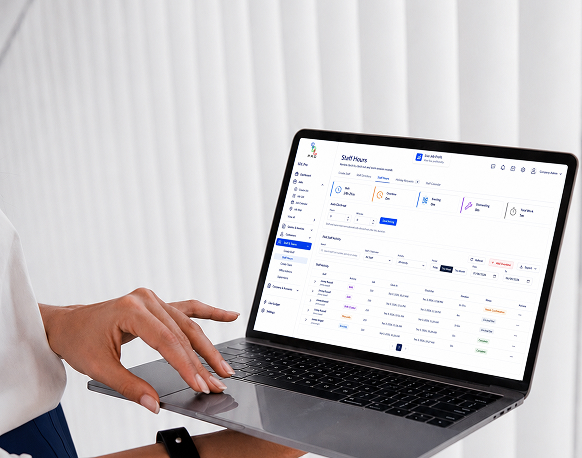
If the real challenge is keeping everything connected, the solution is a workflow where documents and records don’t live in separate places. SDL Pro Management is built to bring key compliance elements together so the job’s story is easier to manage, easier to prove, and easier to share.
| Capability | What it helps you achieve |
| Compliance documents | Store and organise job documentation in
one place so teams aren’t hunting through emails, folders, and phones. |
| Digital inspections | Create inspection records that are easier to complete on site and easier to retrieve later supporting a consistent inspection process. |
| Handover certificates | Generate and retain handover records alongside the job so the handover doesn’t get separated from the scaffold it refers to. |
| Digital forms | Standardise the information your teams capture so critical details don’t get missed
when the pace picks up. |
| Scaff Tags | Support clear scaffold status
communication on site, reinforcing visibility and control alongside your inspection regime. |
| Customer Portal | Give customers a reliable way to access the documents they need—reducing repeat requests and improving service. |
The aim isn’t “paperless for the sake of it.” It’s a more controlled process where the right people can access the right information, and where the business owner can feel confident that growth won’t automatically mean chaos in the compliance trail.
Conclusion: make compliance easier to prove—without lowering the bar
As your scaffolding business grows, compliance paperwork often becomes harder not because you’re doing less, but because it’s harder to keep evidence connected, current, and accessible. The biggest wins come from tightening the links: inspections and handovers tied to the scaffold, RAMS reaching the people who need them, drawings controlled by version, photos filed against the job, and customers able to access what they need without repeated chasing.
Digital systems can make that easier—by standardising capture, improving traceability, and speeding up retrieval—but they only work when backed by competent people and proper inspections. If you want paperwork to stop being the hardest part of staying compliant, focus on building a process that’s as solid as the scaffold itself: clear, controlled, and ready to be checked at any time.